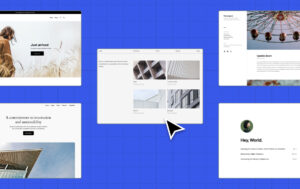
A great theme makes building your WordPress site feel effortless. I went through the most popular options on WordPress.com — based on real usage data — and tested each one. From personal blogs to online stores, I looked at what works best for different types of sites. Here are the 12 best WordPress themes worth considering in 2026. TL;DR: The best WordPress themes Here are our top picks of WordPress.com themes based on real usage data from WordPress.com: Twenty Twenty-Four: Best for content-focused sites. Retrospect: Best for photography websites. Twenty Twenty-Three: Best for getting a flexible starting point Twenty Twenty-Five: Best for building an adaptable, creative site Zoologist: Best for…
In October, we announced that WordPress.com now supports MCP (Model Context Protocol), enabling AI agents to interact with your sites. Today, WordPress.com supports OAuth 2.1, making MCP integrations simpler. MCP clients work natively with OAuth 2.1, so authorizing the AI tools you already use is as straightforward as adding a URL and approving access — no workarounds or manual configuration required. With MCP, AI agents can help with everyday tasks on your WordPress.com site, such as finding posts, pulling site details, or drafting new content, while you control what they can access. How OAuth 2.1 powers MCP integrations When an AI assistant (like Claude Desktop, ChatGPT, or a custom AI…
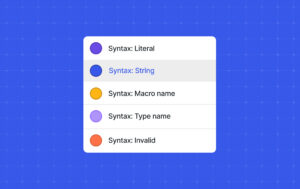
Last year, WordPress.com introduced new code editors for the block editor and the Additional CSS input box in the WordPress admin. This was the first stage of a larger effort to make editing code a more enjoyable experience. Today, I’m happy to announce the launch of the second stage of that effort: introducing the new and improved Code block. This is not a new block. It’s an enhancement to the current Code block that you’ve likely already been using, which includes several improvements over the original: Syntax highlighting: Supports color-based syntax highlighting for over 100 common languages. Configuration: Decide to show the filename, language name, line numbers, and even include…
Managed hosting means your hosting provider takes care of the technical maintenance of your website, including updates, security, and performance. I didn’t realize how much that mattered until I built my first site. I thought my job was just to write and publish — then the updates, security alerts, and performance issues started piling up. In this guide, I explain what managed hosting includes, how it compares to regular hosting, and its advantages. What is managed hosting? Managed hosting is a type of web hosting where the provider takes care of the technical work behind your site for you. Instead of dealing with things like updates, security, and ongoing maintenance…
If you want a website, you need hosting — a place to store your site files so people can access your pages. Even though WordPress can run on almost any server, the hosting environment you choose affects performance, stability, security, and how much technical work you’re responsible for. This guide gives you a simple framework to select the right WordPress hosting plan — whether you’re a first-time blogger, a small business owner, or an experienced agency user. TL;DR: How to pick WordPress hosting for your needs When choosing hosting for your WordPress site, focus on a few key factors like ease of management, speed, security, support, and budget. For a…
WordPress Playground lets anyone launch a live WordPress site instantly — no hosting or installation required. It’s a quick, hands-on way to explore how a theme looks and behaves. You can open a fresh WordPress instance with a single link and start experimenting right away. If a theme is available in the WordPress repository, you can preview it in Playground by adding the theme’s slug to the URL, for example:?theme=kiosko. That said, each Playground site starts with a clean WordPress install, so themes load with no existing pages or demo content. If you want your theme to appear exactly as you’ve designed it — with sample content, navigation, and settings…
WordPress itself is free and open source, but getting a site online always involves costs like a domain and hosting. In this guide, you’ll learn what WordPress includes for free and what you should realistically expect to pay for when running a full website. Is WordPress really free? Yes, but with a caveat WordPress core software is free and open source under the General Public License (GPL). You don’t pay to download it, install it, or build with it. What does cost money is putting your website online. To publish a full site, you’ll need at least: A domain: your site’s address Hosting: the service that keeps your site running…
WordPress hosting helps you get a WordPress site online faster and keep it running smoothly by reducing setup and configuration work. This guide explains what WordPress hosting is, how it differs from other hosting options, and what to look for in a provider. What is WordPress hosting? WordPress hosting is a specialized type of web hosting built and optimized for running WordPress. It gives you the right environment and features to keep your site fast, secure, and low-maintenance. WordPress hosting becomes relevant as soon as you create a WordPress site, since it’s prepared for how WordPress works. Such hosting plans typically include: WordPress pre-installed or one-click installation A domain name…
Agencies move quickly. With constant new client builds, redesigns, plugin audits, and last-minute fixes, everything relies on a workflow that’s stable, fast, and consistent across the team. For many WordPress agencies, the challenge isn’t shipping great work; it’s getting every team member working the same way, on the same stack, without losing time to process. WordPress Studio was created to remove those slowdowns so agencies can spend more time building and less time wrestling with overhead — giving every developer a consistent workflow and helping agencies deliver higher-quality work in less time. Watch the complete walkthrough of these agency workflows below, and keep reading to see how each fits into…
30 days’ notice. Years of memories at stake. Here’s how WordPress.com stepped up. On August 28, 2025, Typepad announced it was shutting down. Creators who’d been blogging since the early 2000s suddenly faced an impossible deadline: save everything or lose it forever in 30 days. We couldn’t let that happen. A race against the clock By September 30 — Typepad’s official shutdown date — 3,684 blogs had successfully migrated to WordPress.com. And here’s the thing: these weren’t small archives. Some creators brought over 3,400+ posts, thousands of images, and nearly 10,000 comments dating back to 2005. The migration wasn’t always smooth. Typepad’s export files often didn’t include media. Some archives…